
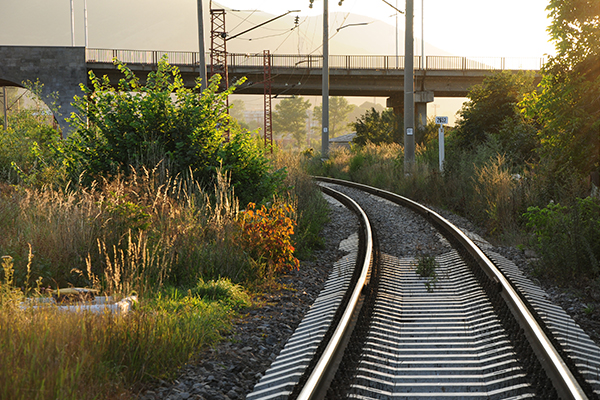
The modern National Recreational Trail, the Lebanon Valley Rail Trail, embodies the history of the industrial age and the tumultuous past of Pennsylvania. The LVRT route, which stretches through Lebanon County, is laid on a historic rail bed that was once a vital part of the American economy and social life, ranging from the transportation of iron ore to the organization of large-scale military training exercises.
Cornwall and Lebanon Railroads
The formation of the Lebanon Valley Rail Trail is inextricably linked to the development of two separate but interconnected local railway lines: the Cornwall & Lebanon Railroad and the Cornwall Railroad. Both main lines were situated and constructed with the primary goal of serving the rich iron ore mines in the Cornwall area. They not only transported extracted iron ore but also ensured the delivery of other byproducts to the numerous iron furnaces and processing plants in the region.
The construction of the Cornwall-Lebanon Railroad was financed in the 1880s by the wealthy entrepreneur Robert H. Coleman, who invested a significant sum of $1.2 million in the project. His line stretched south from the city of Lebanon, Pennsylvania, through Cornwall and further southwest, ending its journey at Conewago Station in neighboring Lancaster County.
In parallel, the Cornwall Railroad, built by William Coleman Freeman, initially ran adjacent to the Cornwall-Lebanon Railroad line to Cornwall, after which it turned south. Its route was directly aimed at serving the iron ore mines and successfully reached the Lancaster region. Both railways functioned as critically important arteries for the local metallurgical industry, which had made the region famous as early as the 1700s.
National Guard Training Camp
In parallel with the development of the resort, the Mt. Gretna and Colebrook area gained significant military importance. In 1885, the Pennsylvania National Guard established its training center here. The railway line played a critical role in the transportation of military personnel.
For decades, the camp served as a necessary base for troop preparation. It was from here that many service members departed to support the US armed forces during significant conflicts, including the Spanish-American War and World War I. During periods of peak activity, up to ten thousand service members could be housed here simultaneously, transforming the forested landscape of Mt. Gretna into a military facility. It is difficult to imagine, looking at the current tranquil area, how busy life was at the camp, which included tanks, artillery, shooting competitions, military drills, and orchestral concerts.
While railroad passengers visited the resort, the military utilized the rail line for their needs. To this day, foundations and monuments remaining from these camps can be found throughout the area. In 1934, the National Guard decided to move its training camp to Ft. Indiantown Gap. In the process, some of the original smaller buildings, including the most famous Rifle Range House, were dismantled and transported to the new location, where they function today as part of the Pennsylvania National Guard Museum.
The Mt. Gretna Resort
Thanks to the Cornwall-Lebanon Railroad, which ran through the beautiful wooded area now known as Mt. Gretna, this section quickly gained popularity among the public. Robert H. Coleman, seeking to expand his passenger business, took advantage of this and built a thriving resort in Mt. Gretna in the late 1890s.
This picturesque location became a major center for recreation. Shortly after passenger service began, picnics and events organized by local businesses and churches were held here. Many churches also chose the area for organizing summer camp meetings.
The amusement park in Mt. Gretna offered visitors a wide range of attractions, transforming it into a true leisure center:
- Carnival rides and concerts, which provided constant entertainment.
- A lake designated for swimming, which became a favorite summer vacation spot.
- A narrow-gauge railway that carried passengers throughout the entire area, including the lake, the military camp, and the elegant Conewago Hotel.
To enter the park, passengers exiting the main train station would walk down the main road, passing a round stone fountain that served as the park’s entrance. Even today, heading towards Mt. Gretna, one can see the remnants of this historic fountain to the left of the trail.
The Era of Decline and the Destructive Force of the Element
The heyday of the railroads and the resort gradually came to an end. Passenger service on these lines was completely discontinued in 1928. In 1918, control of the railway line passed to the Pennsylvania Railroad.
The final devastating blow was dealt by nature. In 1972, the powerful Hurricane Agnes swept through the region. The storm caused massive flooding that inundated the mine in Cornwall, halting iron ore extraction, and also damaged significant sections of the railway track. This disaster marked the end of the line’s function in its original form.
The Birth of the Trail
After the final closure of the railway service, the corridor was under threat. In 1979, a group of concerned local residents made the first attempt to preserve the rail bed, persuading Lebanon County Commissioners to participate in a tender to purchase the corridor. Their goal was to create a public recreational trail. The county lost the bid, and the line was sold into private ownership. Neighboring Lancaster County, however, purchased a portion of the corridor in 1979, creating the 5-mile Conewago Recreational Trail.
However, the threat of development, particularly in the southern part of Lebanon County, sparked a renewed surge of interest in preserving open spaces and restoring the railway bed twenty years later. In 1996, under the leadership of John Wengert Jr., the non-profit organization Lebanon Valley Rails-to-Trails Inc. was registered. This became the key moment. The organization began negotiations with Eastern Enterprises, the private owner of the rail bed that stretched south from the city of Lebanon to the Lancaster County line. Most sections of the historic railbed remained relatively intact.
In December 1999, the LVRT successfully purchased the rail bed from Eastern Enterprises. Following this, in early 2000, an active public fundraising campaign was launched. Thanks to this campaign and the support of several state grants, the organization was able to finance the trail surfacing and carry out all necessary improvements, transforming the neglected corridor into a fully functional route.